Hubble and Webb find clues to the solar system’s past beyond Neptune
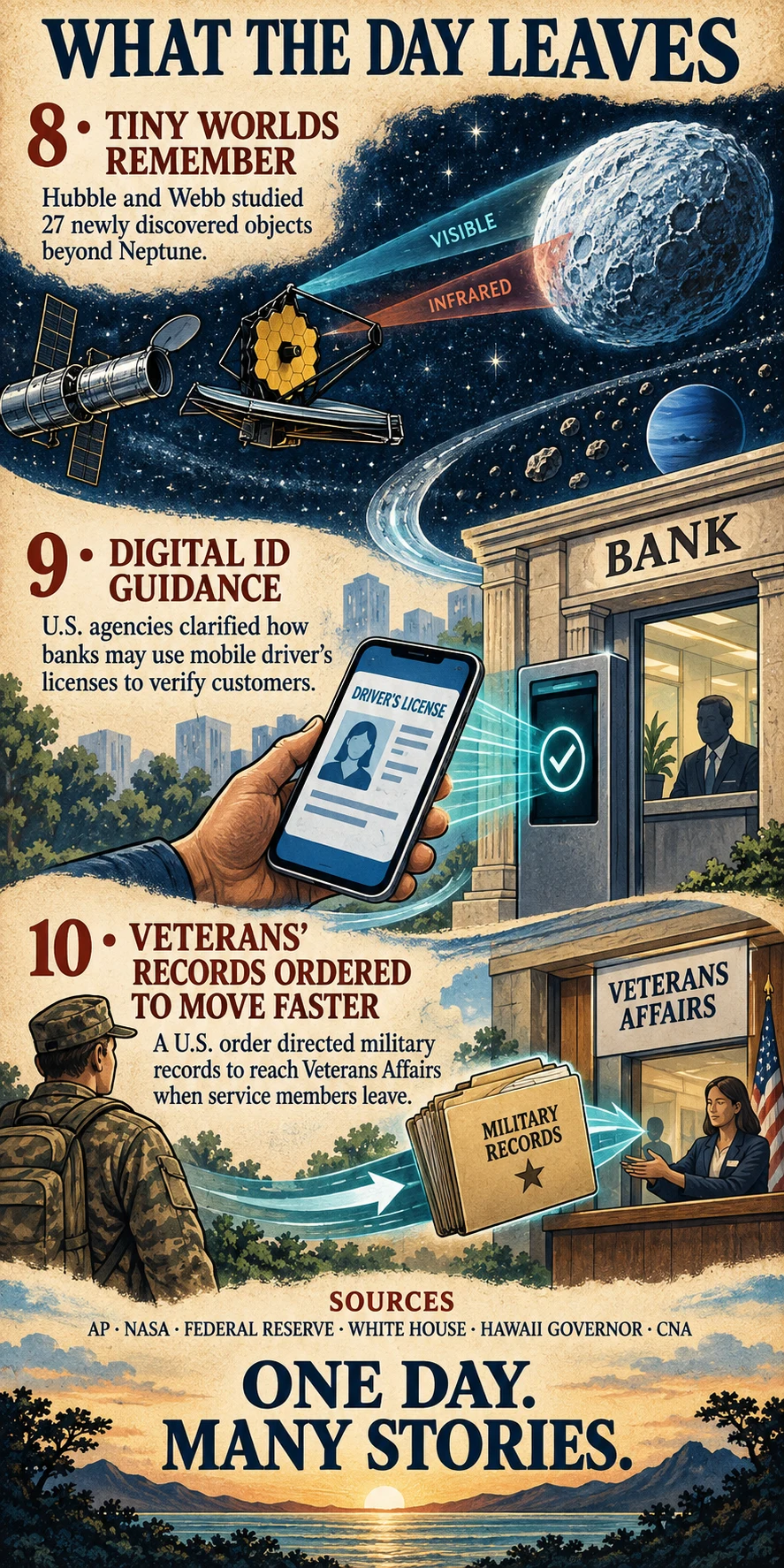
Twenty-seven newly discovered icy worlds offer clues to how planets formed—and how much of that history survives.
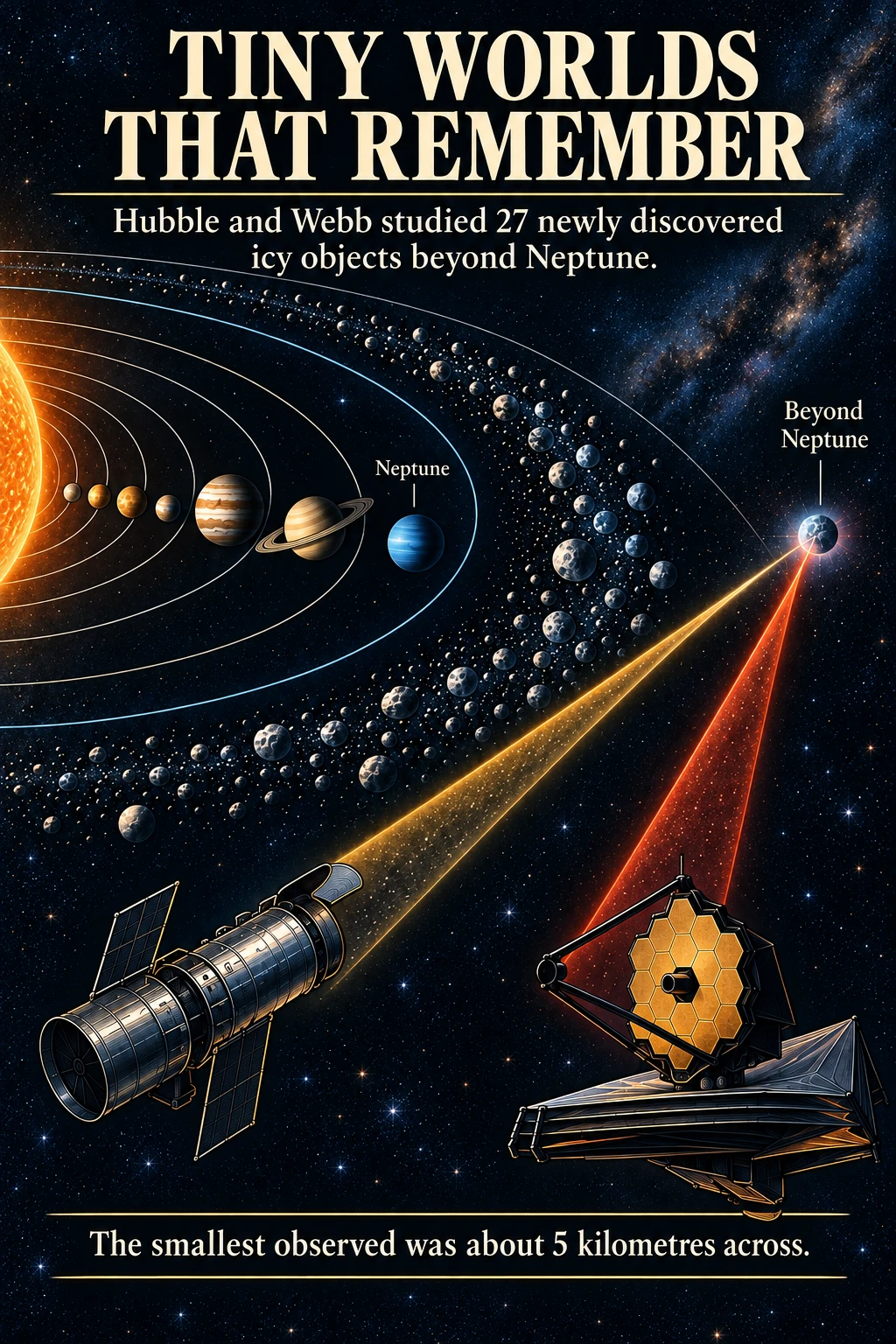
Hubble’s visible-light observations and Webb’s infrared measurements reveal clues to these distant objects’ surfaces. These trans-Neptunian objects are remnants of planet-building; the smallest observed was about five kilometres across.
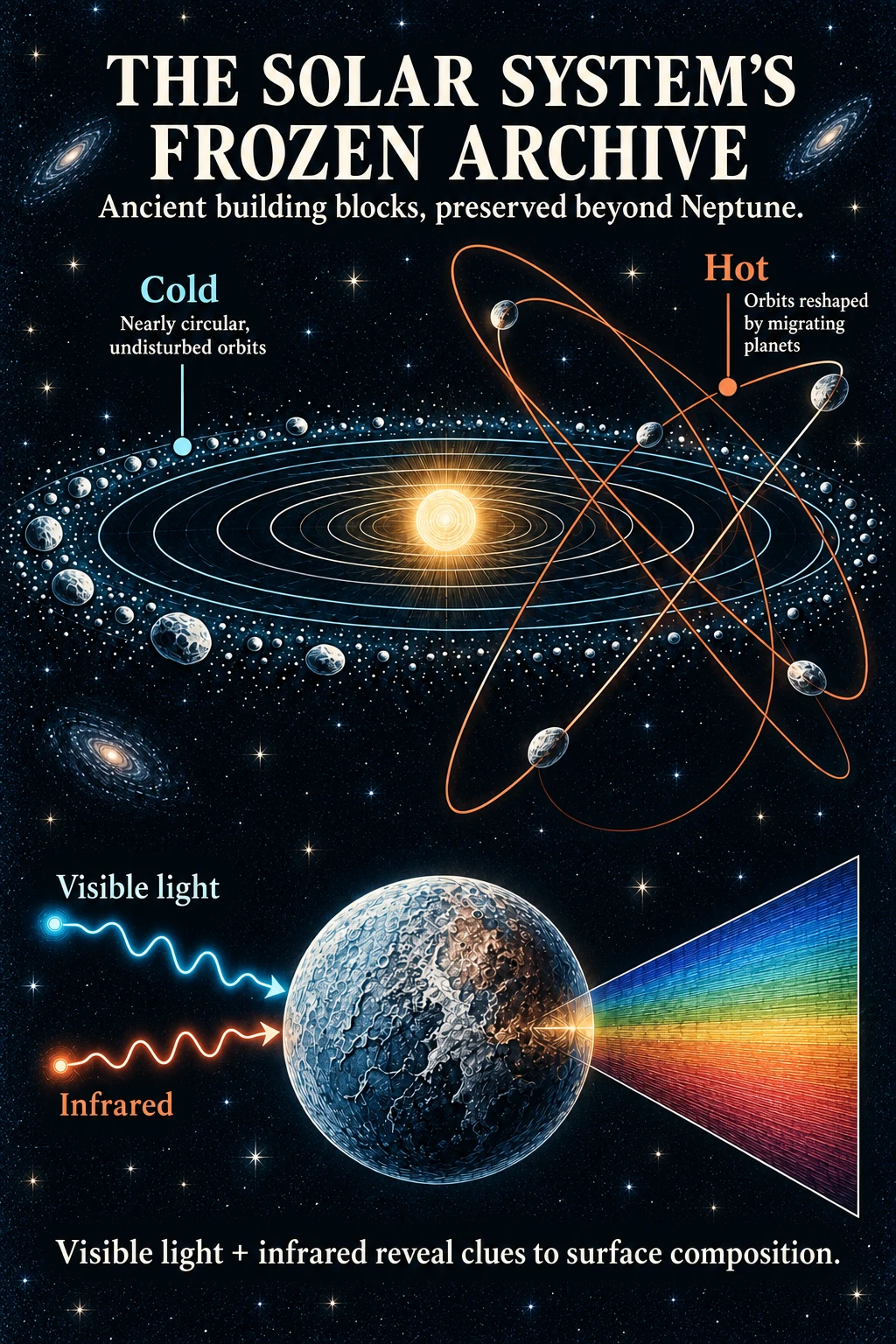
The small worlds resemble their larger relatives in colour, despite expectations that collisions would change their surfaces. “Hot” and “cold” describe their orbits, not their temperatures. Their shared signatures may preserve clues to where they formed.
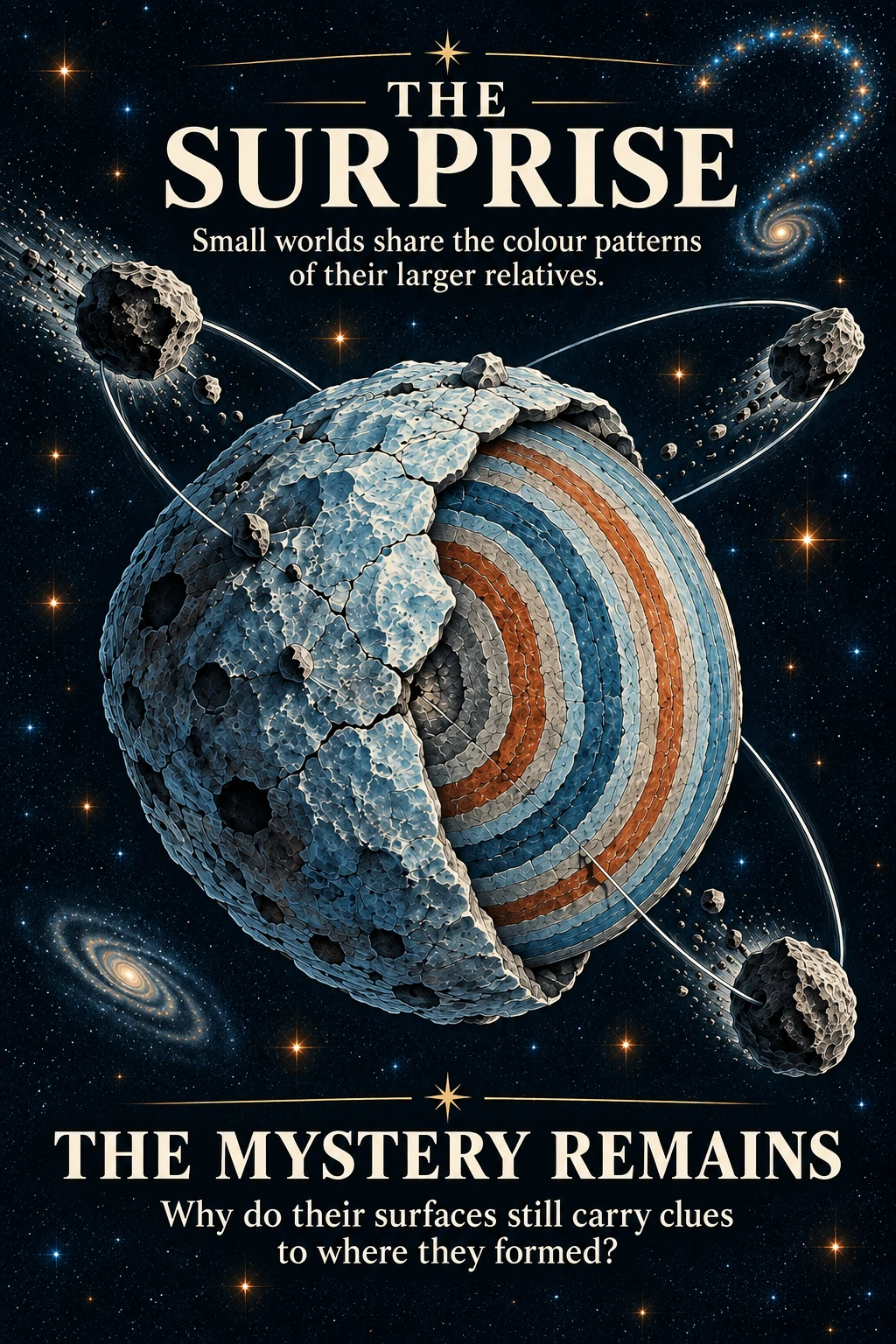
Researchers also found fewer tiny bodies than some models predicted. Together, their numbers and colours help test how planets began. Why these small worlds retain their signatures remains an open question.
Worth remembering?